


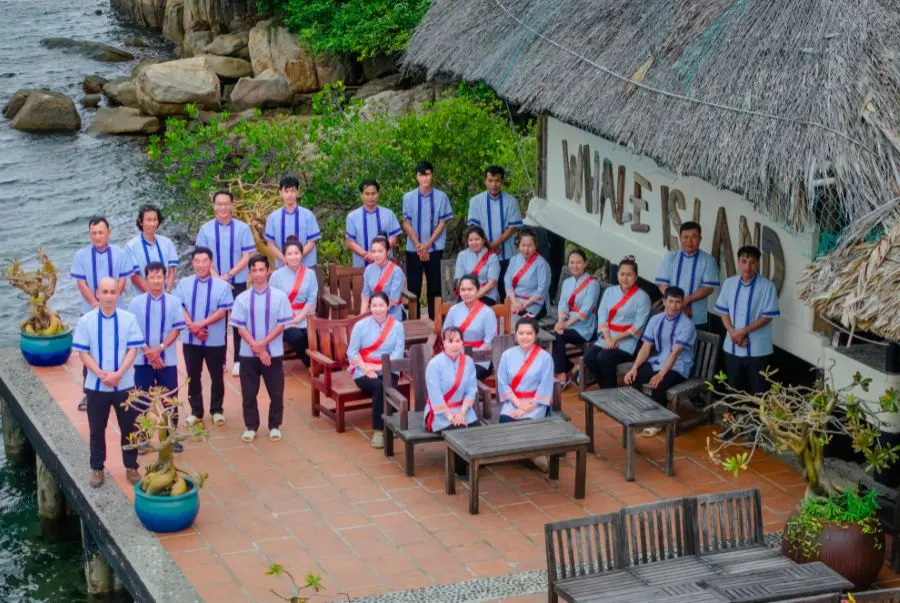
The Hotel Operations & Safety Manual is designed to provide clear guidelines and policies to ensure the smooth running of operations, high standards of quality, and the safety and well-being of guests and staff. This document outlines a comprehensive approach to quality assurance, health and safety measures, as well as crisis and emergency management plans.
I. Quality Assurance Policy
1.1 Policy Statement
The senior management at Whale Island Resort are committed to maintaining high standards and ensuring quality for our guests, staff, and stakeholders. We proactively gather feedback from guests and employees to continuously improve our services and operations. Quality assurance is the responsibility of every department and team member.
1.2 Objectives
• Ensure consistent excellence across all guest touchpoints.
• Uphold high accommodation standards.
• Promptly resolve any service quality issues.
• Continuously improve through audits and feedback.
1.3 Guest Feedback
We have the following procedures in place to monitor and respond to guest feedback:
• Guest comment cards are available at the reception desk, and front office staff proactively invite guests to provide feedback during their stay or at check-out.
• Serious feedback is addressed immediately, and all comments are compiled into a monthly report with improvement recommendations to senior management.
• All staff receive annual training on how to handle guest complaints, and procedures are outlined in the staff handbook.
1.4 Staff Feedback
• A locked suggestion box is located in the staff area with signage inviting anonymous contributions.
• The HR Manager collects suggestions every Saturday and collaborates with department heads for follow-up action.
• Changes made in response to staff feedback are communicated at monthly team meetings.
1.5 Quality Standards and Monitoring
• Each department operates with documented SOPs and service standards.
• Daily checklists and shift reports are used to ensure consistency.
• Guest reviews, surveys, and direct comments are actively monitored.
1.6 Staff Training and Development
• Regular training sessions focus on service standards and complaint handling.
• New hires undergo orientation programs including topics on service quality, sustainability and others.
• Monthly workshops or refresher training are conducted by the department.
• Employees are encouraged to report quality concerns and propose improvements.
1.7 Responsibilities
• General Manager: Oversees implementation and policy review.
• Department Heads: Monitor quality and ensure SOP compliance.
• Quality Control Officer (if appointed): Conducts internal audits and supports training.
1.8 Policy Review
This policy is reviewed every 12 months or after significant operational changes.
II. Health & Safety Policy
2.1 Policy Statement
At Whale Island Resort, the health and safety of our guests, employees, and all stakeholders are paramount. This policy outlines our commitment to maintaining a safe, clean, and secure environment while delivering exceptional service. We strictly adhere to all applicable local, national, and international health and safety regulations.
2.2 Objectives
This policy aims to:
• Ensure the physical and emotional well-being of all guests and staff.
• Identify potential risks and implement preventive measures.
• Maintain full compliance with relevant health and safety legislation and industry best practices.
• Provide a clean, secure, and hazard-free environment.
• Equip staff with training and resources to uphold safety standards.
2.3 Roles and Responsibilities
2.3.1 Management
• Ensure compliance with all health and safety regulations.
• Allocate resources for health and safety maintenance.
• Develop and oversee staff training programs.
• Conduct regular audits and reviews.
2.3.2 Employees
• Follow all safety procedures and protocols.
• Report hazards or unsafe practices immediately.
• Participate in scheduled training.
• Promote a culture of safety and awareness.
2.3.3 Guests
• Follow posted safety guidelines during their stay.
• Report safety concerns or incidents to hotel staff.
• Cooperate during emergency situations and evacuations.
2.4 Health & Hygiene Standards
2.4.1 Cleaning Protocols
• Daily cleaning and disinfection of public areas, guest rooms, and high-touch surfaces using approved agents.
• Routine deep cleaning and pest control as scheduled.
• Special attention to spa, dining areas, and shared equipment.
2.4.2 Food Safety
• Full compliance with Vietnamese National Food Safety and Hygiene Standards.
• Regular kitchen inspections and hygiene audits.
• Mandatory food safety training for all kitchen staff.
2.4.3 Water Quality
• Routine testing and treatment of water systems, tap water (every 6 months) and drinking water (every 3 months).
• Preventative maintenance to minimize Legionella risk (temperature control, water circulation).
2.4.4 Health Monitoring
• Temperature checks and health screenings for staff and guests (when needed).
• Hand sanitizing stations throughout the property (when needed).
• Illness response protocols including isolation procedures when necessary.
2.5 Fire Safety
2.5.1 Fire Prevention
• Regular maintenance of fire alarms, detectors, and sprinkler systems.
• Clear signage for emergency exits and evacuation routes.
• Smoking permitted only in designated areas.
2.5.2 Fire Response
• Fire extinguishers and fire blankets are placed in clearly marked and accessible areas.
• Fire drills conducted regularly for all staff.
• Staff trained as fire marshals and first responders.
2.6. Security Measures
2.6.1 Access Control
• 24/7 security personnel on duty.
• Surveillance cameras installed in public areas.
• Restricted access to sensitive or staff-only areas.
2.6.2 Guest Safety
• In-room safes for personal valuables.
2.7 Emergency Preparedness
2.7.1 Emergency Response Team (ERT)
A trained Emergency Response Team will manage all major incidents. Their responsibilities include:
• Providing first aid and CPR.
• Managing evacuations.
• Coordinating with local emergency services.
2.7.2 Emergency Kits
Emergency kits placed throughout the hotel with first aid supplies, flashlights, and communication tools
2.7.3 Evacuation Procedures
• Clearly marked evacuation routes and assembly areas.
• Conduct evacuation drills regularly, involving both staff and, when appropriate, guests, to ensure readiness.
2.8 Risk Management
2.8.1 Risk Assessments
• Periodic inspections of buildings and operations.
• Review of employee work practices.
• Monitoring of external risks such as weather or security conditions.
2.8.2 Incident Reporting
• All incidents must be recorded using standardized forms.
• Incidents are reviewed regularly to identify trends and corrective actions.
2.9 Staff Training and Development
• All staff receive regular training in hygiene, fire safety, emergency response, and first aid.
• Training is updated to reflect new regulations or risks.
• Role-specific refresher sessions conducted at least annually.
2.10. Conclusion
At Whale Island Resort, health and safety are non-negotiable. Through the implementation of this comprehensive policy, we aim to not only meet but exceed guest expectations for safety and comfort. This policy will be reviewed regularly and updated to reflect changing standards, ensuring we remain a leader in health and safety excellence in hospitality.
3. Crisis and Emergency Management Plan
3.1 Policy statement
A crisis management plan is essential for ensuring the safety of guests, staff, and assets while maintaining operational continuity. This document outlines the procedures to prepare for, respond to, and recover from emergencies such as natural disasters, health crises, environmental incidents, or security threats.
3.2 Objectives
• Ensure the safety and security of guests, staff, and visitors.
• Minimize damage and disruption to hotel operations.
• Maintain strong internal and external communication during crises.
• Protect the hotel’s reputation and maintain guest trust.
3.3 Crisis Types Covered
• Fire or Explosion.
• Natural Disasters (e.g. flood, earthquake, storm).
• Health Crises (e.g. food poisoning, infectious disease outbreak).
• Chemical or Environmental Incident.
• Security Threats (e.g. theft, assault, terrorism).
• IT or Data Breach.
3.4 Crisis Management Team (CMT)
• Roles & Responsibilities
• General Manager: Team Leader – Overall Coordination.
• Safety & Security Manager: Emergency Coordinator.
• HR Manager: Staff Support and Internal Communication.
• Front Office Manager: Guest Communication & Evacuation.
• F&B Manager: Food & Water Safety.
• IT Manager: Data & System Security.
The Crisis Management Team is responsible for coordinating the response across all departments.
Note: Additional department heads may be included based on the nature of the crisis.
3.5 Communication Plan
3.5.1 Internal Communication
• Create an emergency WhatsApp/Zalo/SMS group for instant staff alerts.
• Department heads must report updates to the GM or CMT promptly.
3.5.2 External Communication
• Appoint a designated spokesperson for all media responses.
• Use pre-approved messages for guest communication to ensure consistency.
• Notify key stakeholders: hotel owners, local authorities, tour operators, and travel agents.
3.6 Emergency Procedures
3.6.1 Fire or Explosion
• Trigger the fire alarm.
• Evacuate guests via emergency exits.
• Notify the fire department immediately.
• CMT checks guest/staff count and provides first aid.
• Do not re-enter until declared safe by authorities.
3.6.2 Natural Disaster (Flood, Earthquake, Storm)
• Monitor weather alerts and local authority announcements.
• Secure loose items and critical assets.
• Move guests and staff to designated safe zones.
• Maintain backup power, water, and food supplies.
• Provide regular updates to guests.
3.6.3 Health Crisis (e.g. Pandemic, Food Poisoning)
• Isolate affected guest(s) or staff immediately.
• Notify local health authorities.
• Provide medical support and ensure PPE availability.
• Disinfect affected areas thoroughly.
• Keep detailed incident records and review food safety protocols.
3.6.4 Chemical or Environmental Incident
• Stop the source of the leak if it is safe to do so.
• Isolate the area and prevent spread to drains, soil, or water bodies.
• Use spill kits and PPE during clean-up.
• Notify environmental authorities if necessary.
• Document the incident and conduct root cause analysis.
3.6.5 Security Threat (Theft, Assault, Violence, Terrorism) Đe doạ an ninh
• Alert the security team and General Manager.
• Isolate the affected area and evacuate if needed.
• Contact local police or emergency responders.
• Do not confront the suspect unless trained to do so.
• Record all details of the incident.
3.6.6 IT or Data Breach
• Notify the IT Manager immediately.
• Disconnect affected devices from the network.
• Warn staff not to access the system until safe.
• Secure all data backups and evaluate breach impact.
• Inform affected guests if there is any risk of personal data exposure or misuse.
• Update cyber security measures and protocols.
3.7 Training and Drills
• Bi-annually evacuation and fire drills.
• Annual training on handling each crisis type.
• Role-specific training for CMT and department heads.
• Post-drill reviews to identify improvements.
3.8 Post-Crisis Review & Recovery
3.8.1 Debrief & Review
• Conduct internal staff debriefings.
• Gather feedback from staff and guests.
• Identify what worked and what needs improvement.
3.8.2 Recovery Actions
• Assess damage and operational impact.
• Support guests with rebooking, refunds, or transfers.
• Provide counseling or mental health support for affected staff.
• Update SOPs and training based on lessons learned.
3.8.3 Reputation Management
• Issue transparent communications to stakeholders and guests.
• Highlight improvements made after the crisis.
• Engage with the community to rebuild trust.